
Meandering Months
An incomplete list of some stuff I read in March, April, & May

This is a very incomplete list of the books I’ve read in the last 3 months. I am 44 books towards my ambitious 100 book goal for the year. Some books will be reviewed in greater detail at a later date. But until then, here is a smattering of the best books that I had the pleasure of reading recently.
March
1. Island Home by Tim Winton
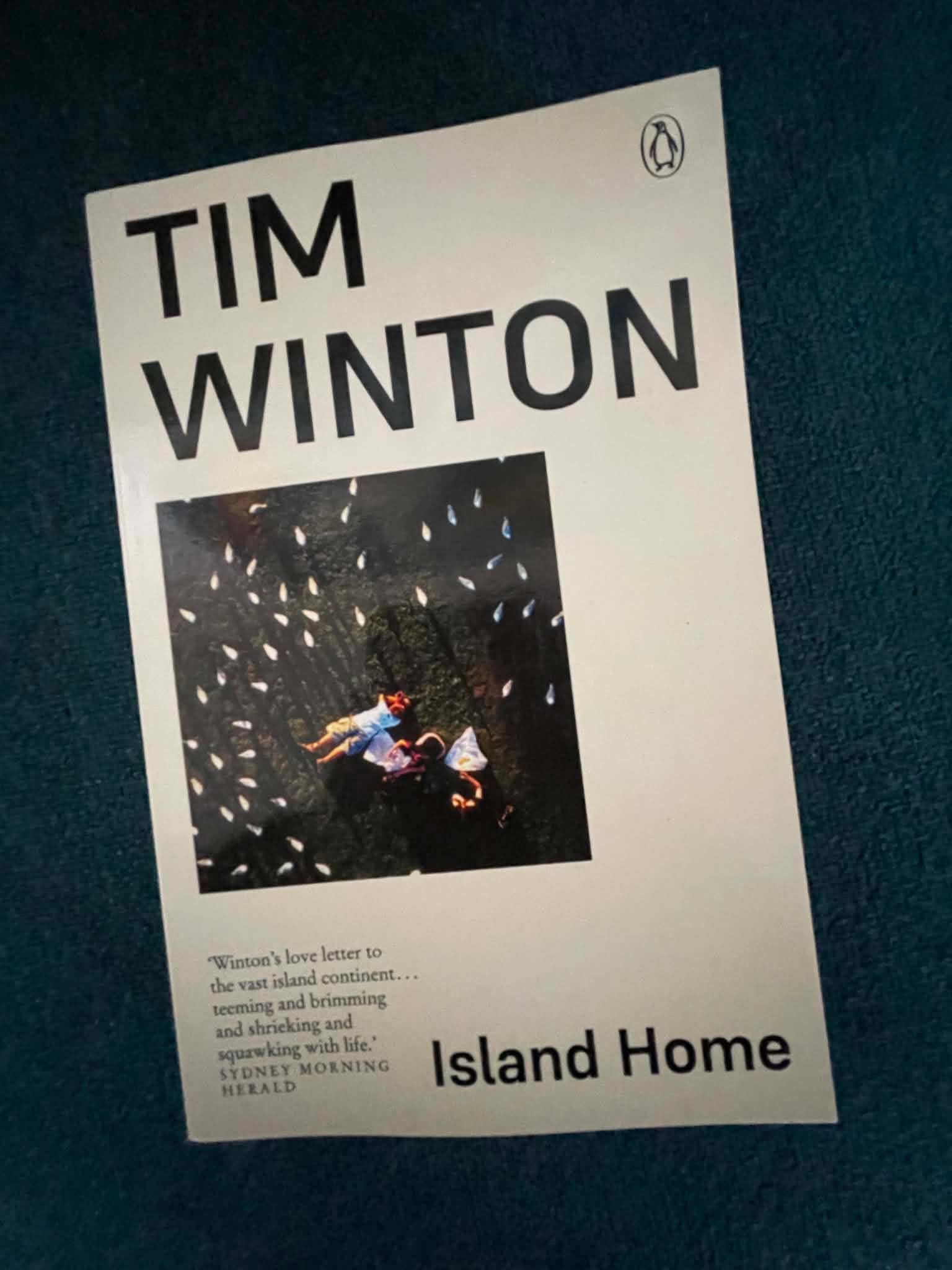
Winton is one of Australia’s best and most celebrated novelists. His books clutter school curriculums and a few even sit unread on my bookshelves. So, it does feel strange to begin my reading with a non-fiction. I bought ‘Island Home’ as a gift for Michael last Christmas, and he insisted that I read it. Annoyingly, like always, he was correct. This book is brilliant. A collection of essays written about his time in various places in Australia, it is an ode to this strange place and the enigmatic people that live here. It made me proud of my adoptive country; to see the light and shade of the place I call home. Winton manages to weave personal experience, landscape, history, and the ever-present sense of the gothic lingering beneath it all. And to top of it all off the writing in this book is exquisitely beautiful – intricate and expressive, at times it felt more like poetry than prose. It is not news that Winton is a master of words.
2. Everything is Tuberculosis by John Green
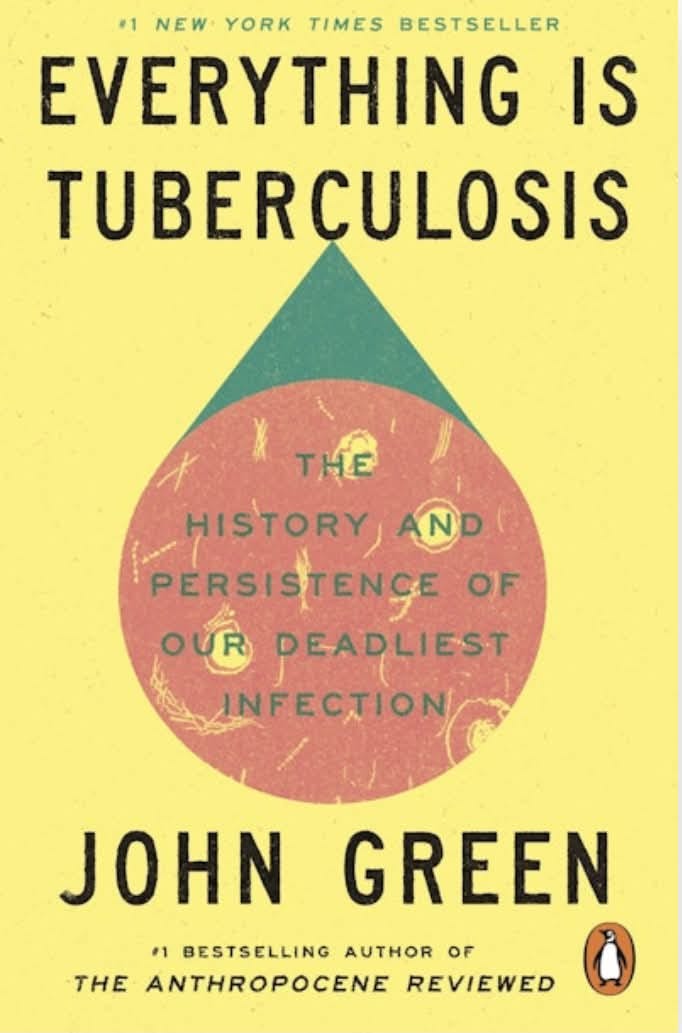
I don’t know what I expected when I picked this book up from the library. I’m aware of John Green but, I’ve never actually read any of his books. I had already aged out of YA fiction by the time they were taking the world by storm. But what snippets I’ve seen of John Green online has left me with a generally positive impression. Everything is Tuberculosis is a fantastic book. It’s non-fiction that reads like fiction – which makes sense given that fiction is John Green’s forte. It is a recounting of the history of one of the world’s most deadly diseases grounded through Green’s personal relationship with a young man suffering from TB that he met on a trip to Sierra Leone. Now, I love history and found all the weird details of the disease and how it helped shape the modern world to be enthralling, like how TB influenced beauty standards for women. But what really stuck with me was how Green highlighted how disease throws global inequities into stark relief. A devastating disease that was cured in 1946 still ravages less economically prosperous countries, ripping communities and families apart, cutting lives short, all because they can’t afford medicine and basic care. TB has played an important part in world history, and it still does. Green’s book is a reminder to look beyond the world in which you live and consider the wider community of humanity that we are all inextricably bound too.
3. Piranesi by Susanna Clarke
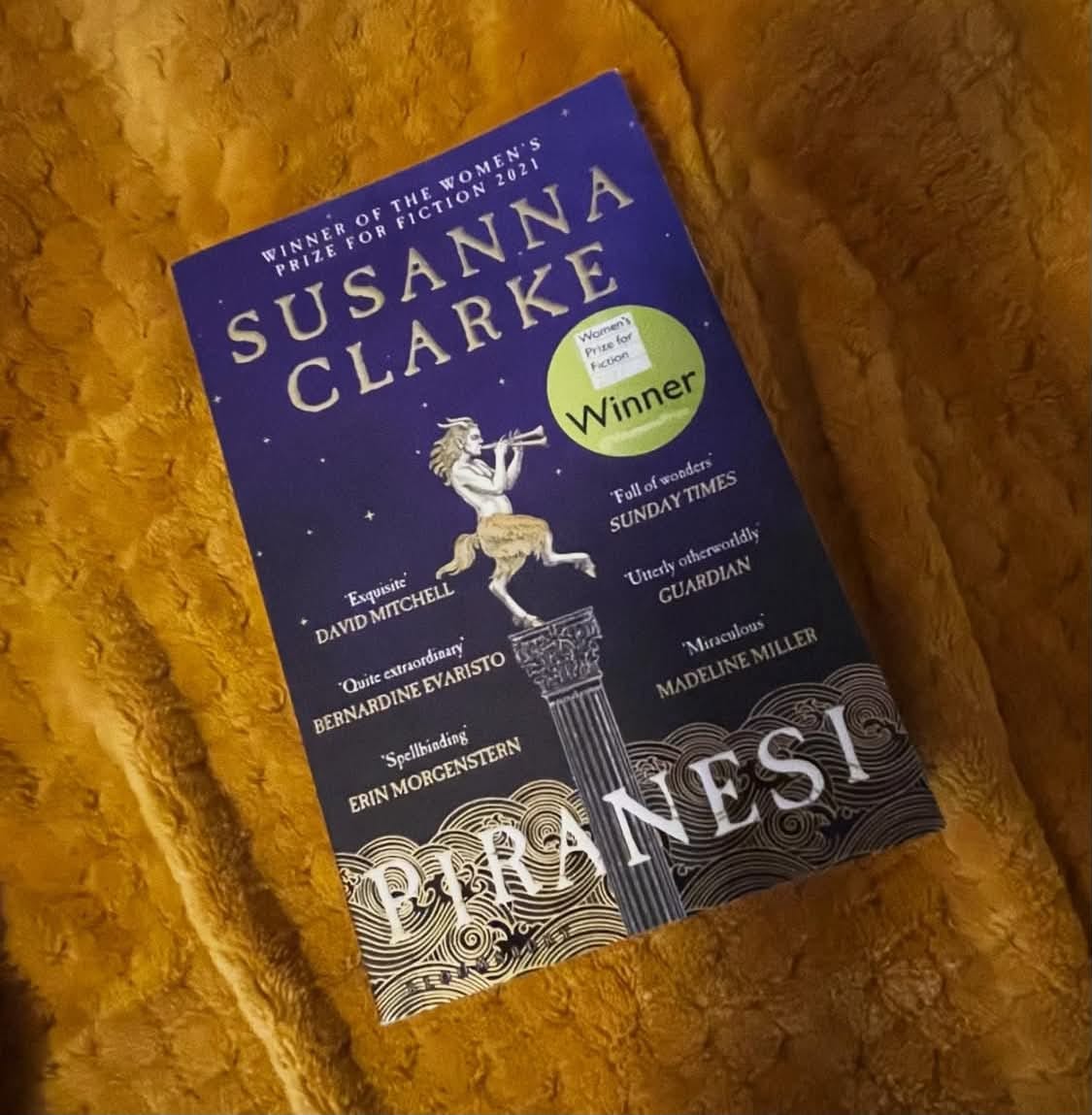
I fucking loved this book. I had no idea what I was getting into when I flipped open this magical tome. Clarke transported me to a world beyond anything I could fathom. Our intrepid guide through the labyrinthine halls, Piranesi, is an enthralling creature that spends his days exploring the vestibules and paths of the ‘House’ trying to guess at the origins of much of what he sees. Twice a week he is joined by the ‘Other’ and warned of a malevolent new intruder that may seek out Piranesi. The narrative blooms in surprising and surreal patterns – like being carried on a gentle wave as you lie looking up at the clouds. I really can’t praise this book enough, when you read a lot, it sort of becomes harder and harder to be surprised, but this was a delightful surprise from beginning to end. This speculative fiction – often compared to Plato’s allegory of the cave – is not only a compelling story, but also a thought-provoking exploration of the mind.
April
1. The Rosie Result by Graeme Simsion
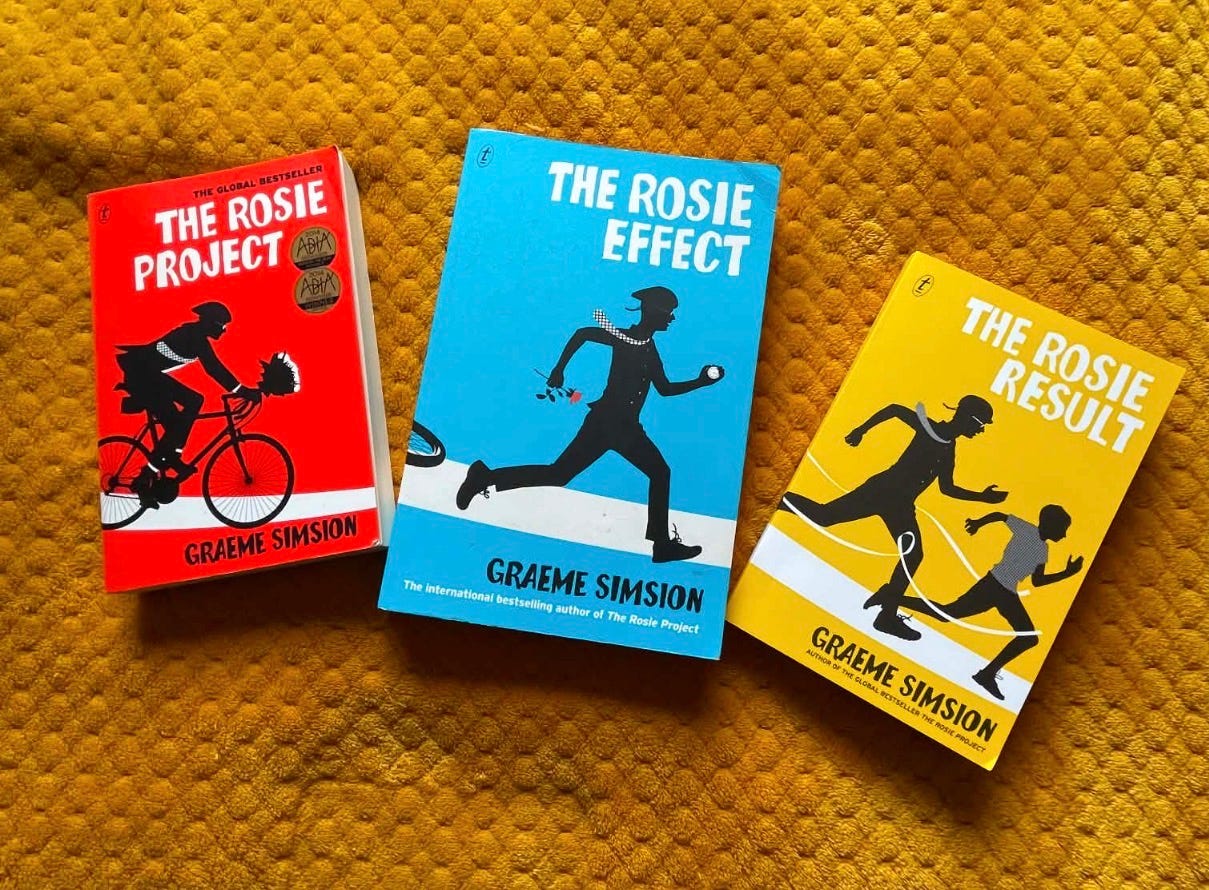
The Rosie Result is the last in a trilogy that follows Melbourne academic Don on his search for love, family, and acceptance. Don is most likely autistic, this is the central thesis of the first book really, that and his finding Rosie - the most perfect woman for Don. Through their relationship he is able to explore his limitations and move towards a better understanding of himself. This last book focuses on Don trying to help his odd 10-year-old son navigate the challenges of school and friends (many of which are similar to what Don faced as a child). It is a heartwarming tale of love. It centres disabled characters and tells their stories whilst extending them full humanity – something that is unfortunately hard to find. Autism, being a spectrum disorder, means that no two autistic people experience their diagnosis in the exact same way. The Rosie Result does well to demonstrate this. Through compassionate exploration of these characters, it blows apart many outdated and harmful stereotypes. I love this series for all its silly high-jinx, socially fraught encounters, and the love right at the centre of it all.
2. How to be a Woman by Caitlin Moran
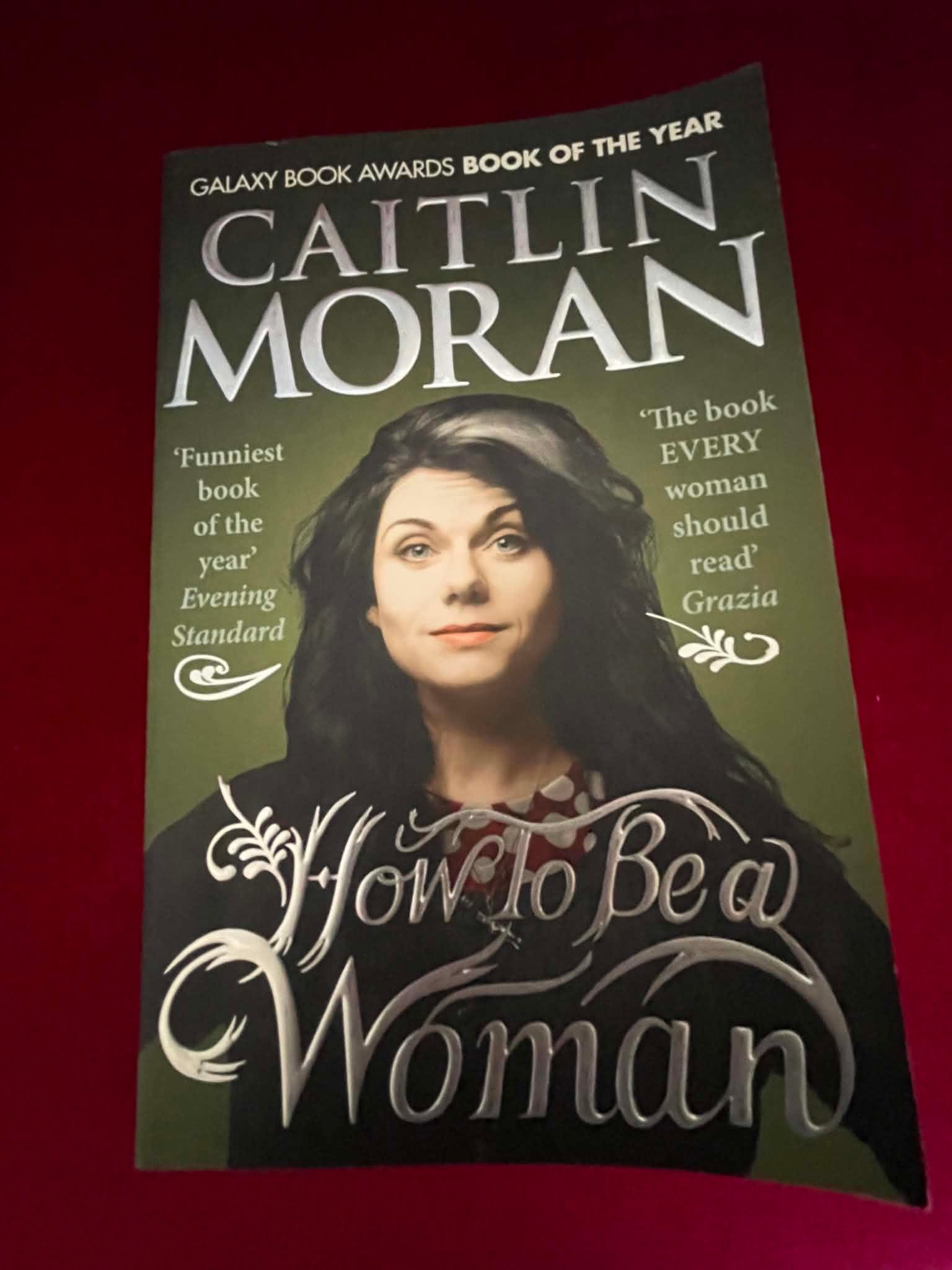
I have read this book many times. I have actually read all of Moran’s books many times. Listened to them too. They are a comfort read of sorts. And every new age at which I encounter How to be a Woman, I learn something new – about myself, about the world, about being a woman. I like to give this book as a gift to my women friends; it’s a kind of perfect introduction to feminism from a weird working-class gal from Wolverhampton. It’s not that cerebral philosophical stuff that induces a headache, and most importantly it’s hopeful. This book made me feel excited about being a woman, even though sometimes it is just a bit shit. I love Moran, I was a fat lonely teenager just like her, and I also felt a kind of terror at the prospect of having to ‘be a woman.’ No one really ever tells you how you’re meant to pull it off. I like to think of Moran as a kind of guide of sorts. An elder woman, telling me tales of what’s to come. A comforting sane presence in the insane maelstrom of life with tits and too many opinions.
May
1. The Narrow Road to the Deep North by Richard Flanagan
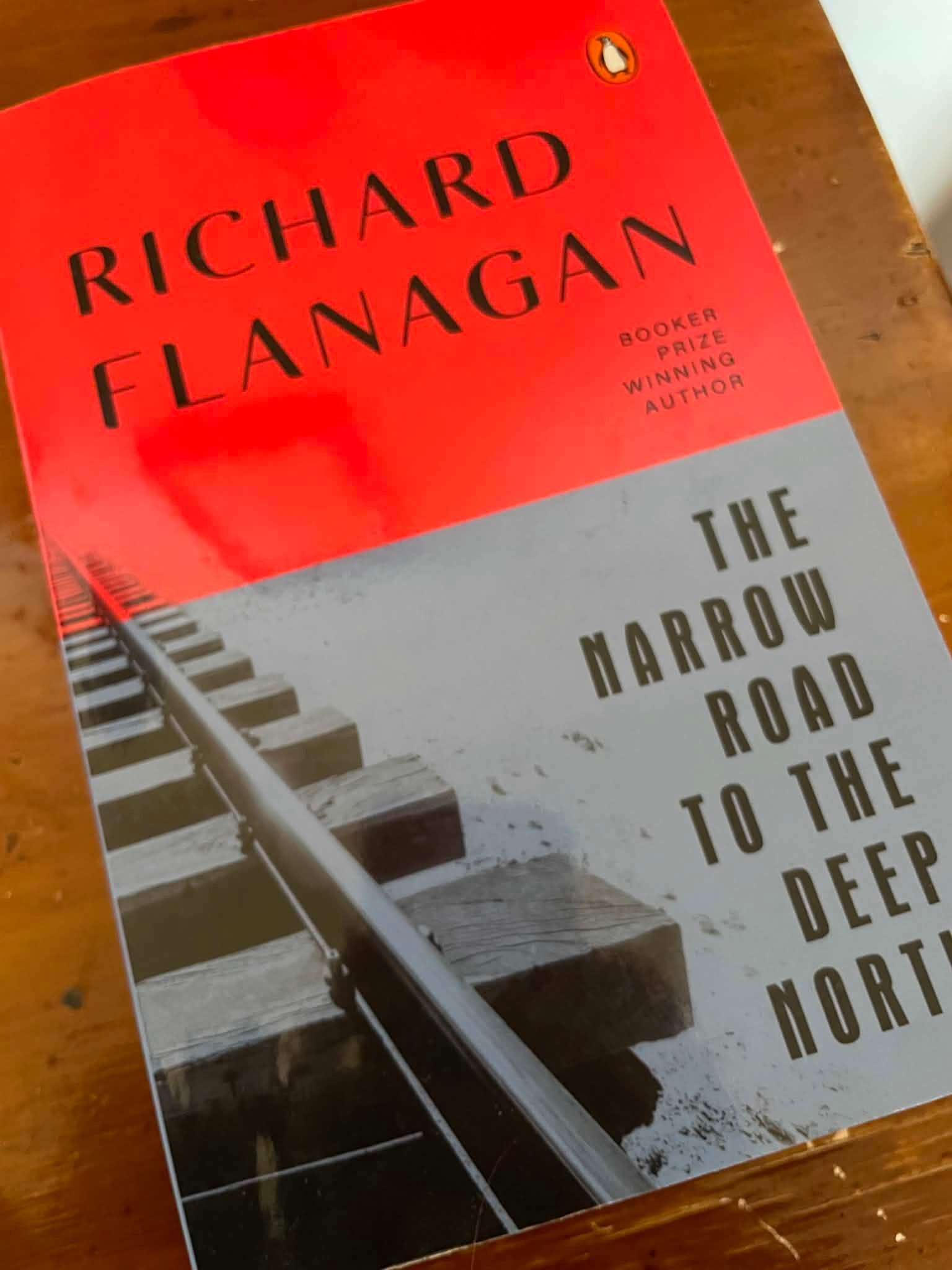
Also a bookclub pick, this was a very unexpected read. It consumed most of the month of May. A story of WW2 Australian POW’s as they were forced to work on the Burma Death rail. It is a harrowing tale of war, suffering and the irrepressible human spirit. I’m a bit ashamed to admit I was unaware of this particular part of my country’s history. The 12,000 Australian soldiers that spent anywhere up to three and a half years as Japanese prisoners of war in Southeast Asia and the abject conditions in which they were kept and worked to death. The novel charts the lives of various characters from rural Australia to the POW camps and back into the world beyond, primarily focusing on a surgeon that became responsible for the men under his command throughout the life altering ordeal. Flanagan brilliantly exposes prejudices and offers complex philosophical questions on good, evil, morality, and whether each of us is simply a product of our thrown-ness. It is a complicated book, with a flowing non-linear narrative. Flanagan asks a lot of his readers, and if you refuse to shrink from it, then it is an incredibly rewarding read. Maybe even one of the best books I’ve ever read. I never would have picked this book up if it wasn’t for bookclub and that would have been a great shame. Thus, proving the value of being part of a bookclub and reading outside your comfort zone.
Damnit, Evie, my TBR list continues to grow with your fantabulous reviews. I have never even heard of Tim Winton (sorry Tim), but now Island Home is a MUST. How to be a Woman sounds like a winner, too - v much in need of hopecore over here! Piranesi - also made note!
I have thrilling news to share that Lena's FAMESICK found me at Marshall's over the weekend, and when I saw it, my mind immediately flashed to you. If it's not in your hands by the time I finish it, I'll send her your way. <3
Love your Meandering Months.
I loved John Green's The Fault In Our Stars even though I read it in my 40s. Thanks for inspiring me to read his Tuberculosis book♥️🔥🙏